
Centralise the receipt of
documents from customers, suppliers and partners in a secure, encrypted and traceable environment, in compliance with the GDPR



Sensitive information continues to be transmitted via uncontrolled channels and stored in intermediate locations
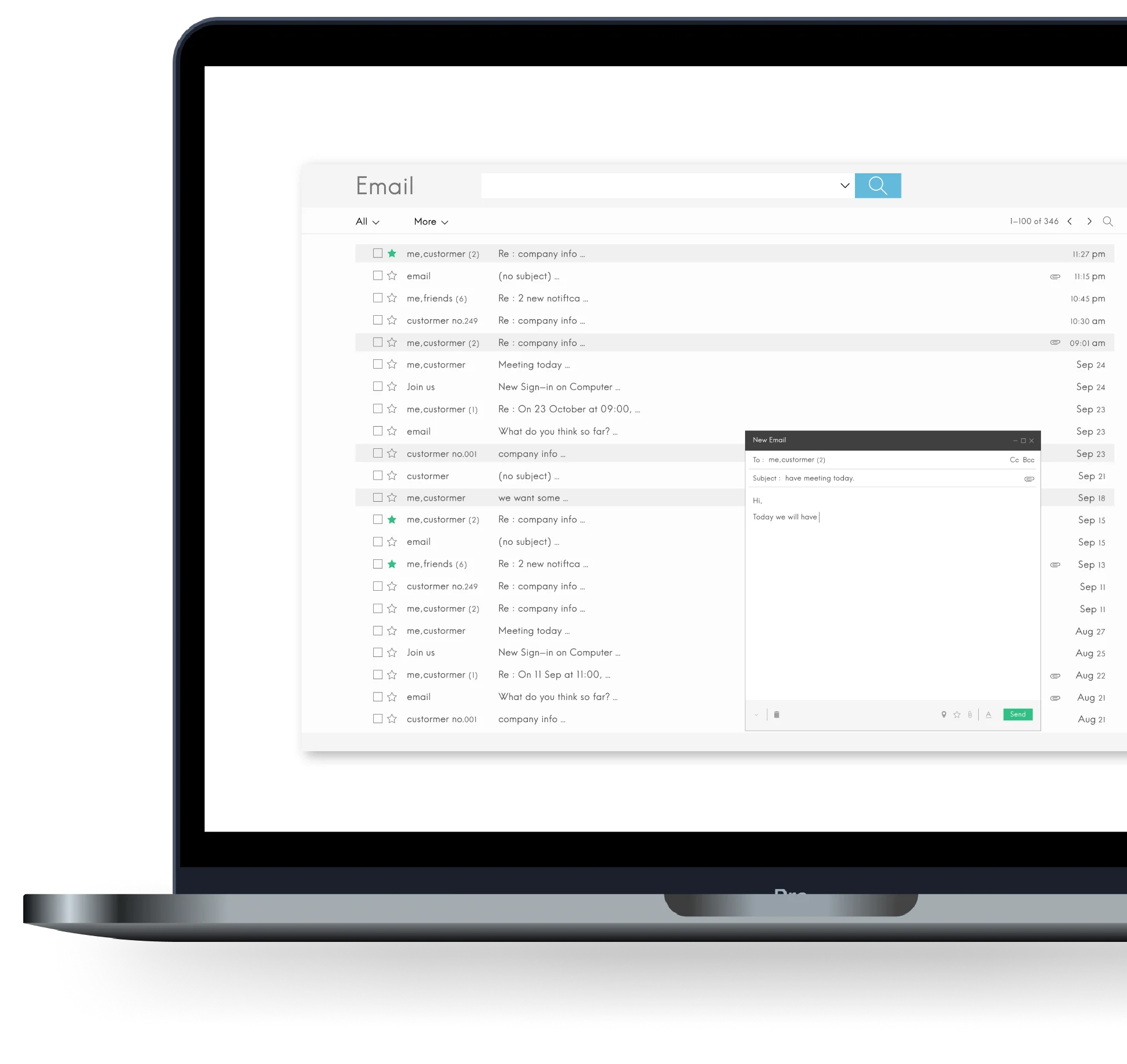
Legacy email or FTP systems do not guarantee security or control.



Tranxfer eliminates email as a channel for receiving documents and establishes a secure, centralised layer of document control.




It also includes an optional bundle for connecting to the Tax Agency and Citizen’s Folders, enabling users to retrieve or validate officially signed electronic documents from a single, secure environment.
(For Spain, Italy and Portugal only)


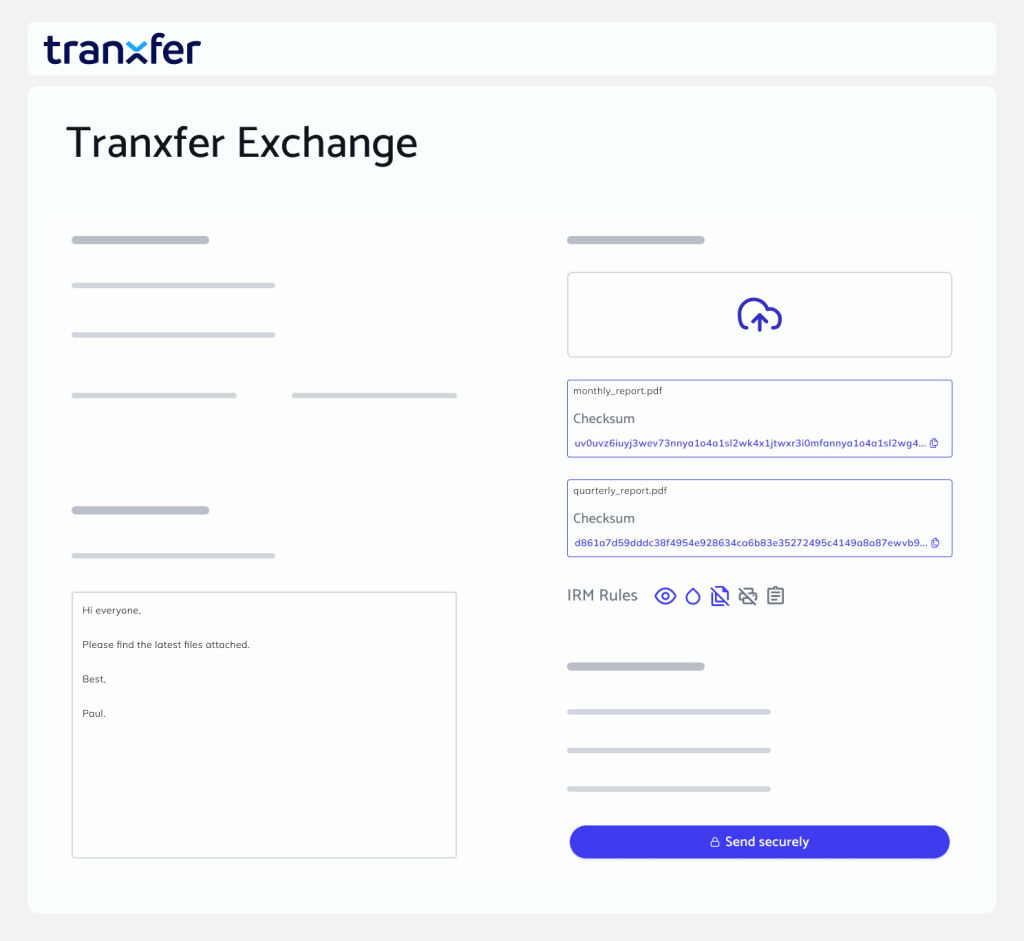
Receipt of the document via the portal, API or encrypted link.

Automatic validation (integrity, antivirus, metadata).
Classification by type and origin.

Automatic distribution or archiving in internal systems (CRM, DMS, ERP).
Obtaining or verifying documents from official sources.
Integrated with the Secure Intake, Compliance Framework and Workflow Automation modules.
Native connectors with corporate CRM, ERP and DMS systems (Salesforce, SAP, Dynamics, ServiceNow) and an optional bundle with the Tax Agency and the Citizen’s Folder.

Tranxfer protects files using end-to-end encryption directly within the browser to ensure security, thereby ensuring that files and the information they contain remain inaccessible to third parties at all times. Key features include an antivirus module updated up to three times a day and its DLP system, which allows users to configure various rules to prevent data leaks.
Tranxfer is available in three deployment options: 1. Public cloud – licences hosted on Tranxfer’s public cloud (Google Cloud). The fastest option to get started. 2. Dedicated cloud – a private cloud environment for the customer. 3. On-premises – integrated with the customer’s existing corporate and security systems.
Tranxfer can be deployed on Google Cloud Platform, Microsoft Azure and Amazon Web Services.
Tranxfer uses end-to-end encryption via the browser with an HTTPS certificate. All data traffic is transmitted using SSL/TLS certificates. Data is encrypted both in transit and at rest using the AES-256 standard.
Tranxfer can be adapted to match your company’s look and feel by incorporating logos, typography, corporate colours and background images. The level of customisation depends largely on the deployment method and incurs an additional cost.