What is ransomware? Ransomware is a type of malware that infiltrates devices, infects them, and locks the data, demanding that the victim pay a ransom to unlock it. According to the 6th Hiscox Cyber Readiness Report, 48% of companies suffered a malware attack in 2021. Other key findings from the report include that the average cost of attacks rose to €15,300, and that one in five companies reported having suffered a ransomware attack.
Sixty-four percent of organizations that suffered a ransomware attack paid the ransom. This is a very high figure for an action that is not recommended; by paying, this type of attack is being encouraged. Furthermore, only 24% of these companies recovered their data, and nearly half were attacked again. So, what should be done? The recommendation is not to pay, since paying in no way guarantees the recovery of data.
How does “Ransomware” get in, and how can it be prevented?
It mainly enters via email, followed by cloud storage services. It enters as a piece of code hidden in a file or link; if the user clicks on it or downloads it, the device becomes infected.
It mainly enters through email, followed by cloud storage services. It enters as a piece of code hidden within a file or link; if the user clicks on it or downloads it, the device becomes infected. That’s why it’s important to be cautious of suspicious websites or emails and not to open them. Here are some recommendations to protect your devices:
- Do not open suspicious attachments: As mentioned, email is one of the main entry points for malware, and hackers use it to send malicious files as email attachments.
- Do not open suspicious links: Ransomware can also be hidden in malicious links, so do not click on links received through unsecured channels. It is important to closely inspect any links, emails, or other messages you receive and ensure they come from a trusted source before interacting with any of their content
- Back up your data: Backing up your data is highly recommended, as if you fall victim to a ransomware attack, you can use the backup to recover your data without having to pay the ransom.
- Keep your software up to date: Software updates always include security patches for vulnerabilities as they are detected. For this reason, it is important to always have the latest version of all your software in order to make it as difficult as possible for cybercriminals to find a security breach.
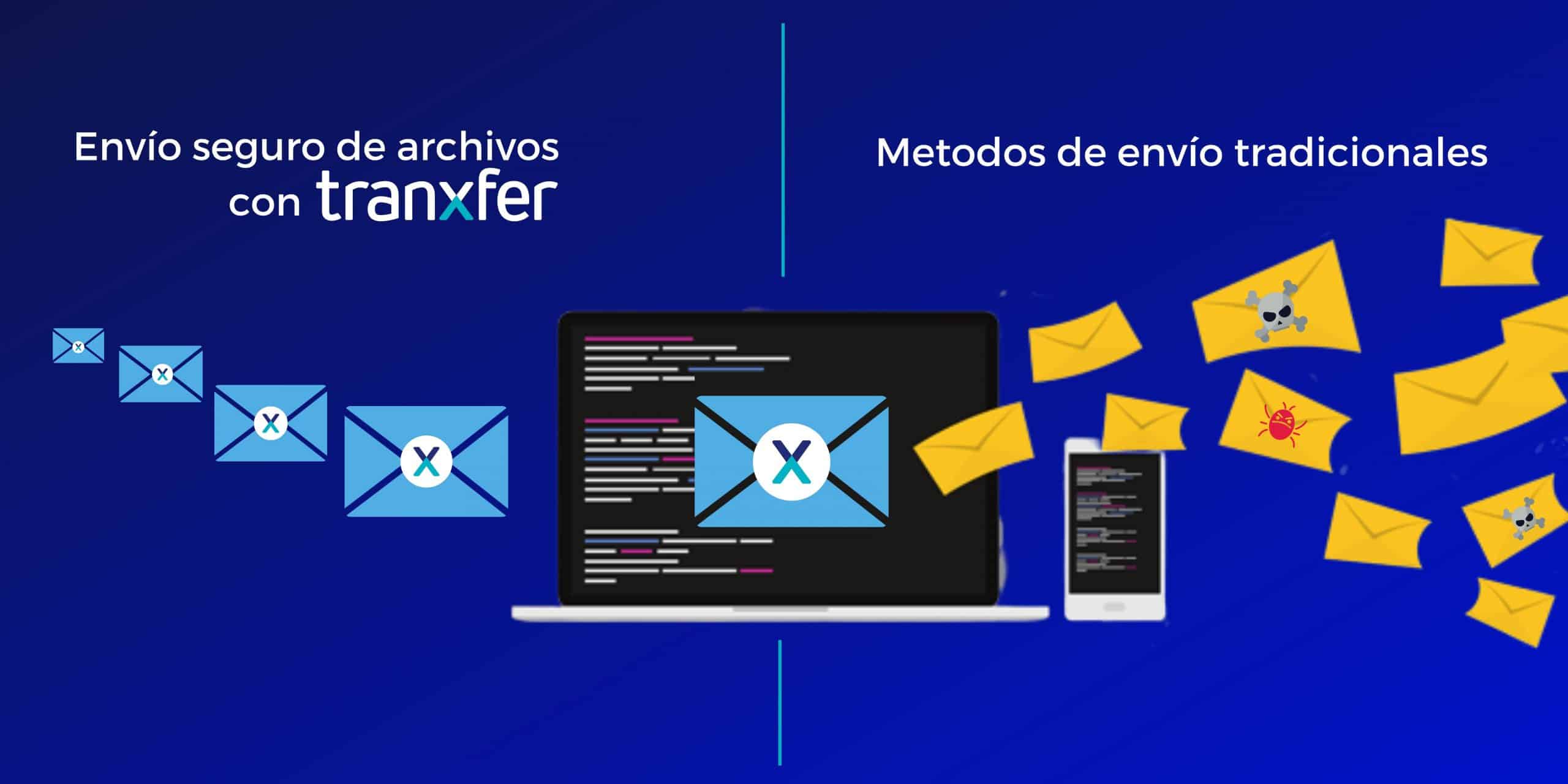
The best way to prevent this is to use an MFT like Tranxfer, providing a secure channel for file sharing both within and outside the company.
Tranxfer provides a channel for information exchange with end-to-end encryption, traceability, DLP, and many other features that ensure no file arriving through this channel is malicious. You can request a demo here.